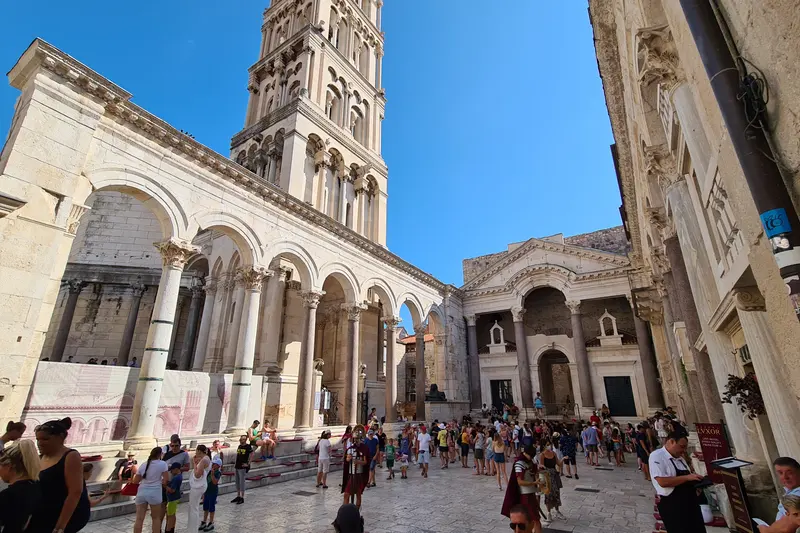
Understand what you are visiting
Built for the Roman emperor Diocletian around the turn of the fourth century, the palace survives as part of Split’s historic core. It is not a sealed archaeological site with one entrance. Its streets remain part of a working city, which explains both the atmosphere and the need to respect residents, entrances and quiet corners.
The main places to find
Use the Peristyle as your reference point. Nearby are the Vestibule, the cathedral area and access to the substructures below the palace. Walk out towards the Golden Gate on the northern side, then return by a different lane. The gates help you understand the shape of the palace, but the smaller passages often make the walk more rewarding.
Free streets, separate admissions
Walking through the open lanes and squares does not require a general palace ticket. Cathedral interiors, the bell tower, museums and some underground areas have their own admission arrangements. Check what a ticket includes before paying, particularly if you only want one part. Prices, combinations and opening hours can change, so use the official information rather than relying on an old screenshot.
Choose your pace
Give the Palace a couple of unhurried hours for the lanes and one or two stops. A guide can connect the Roman building with the later city, but wandering works well too. Start at the Peristyle, make a short loop and look up: a doorway, courtyard or reused piece of stone is often what makes the walk memorable.
Practical details that matter
Stone paving, steps and uneven surfaces make comfortable footwear worthwhile. Some passages and monuments are difficult with a wheelchair or a large pushchair; check access with each attraction. Photograph respectfully, avoid blocking doorways, and remember that people live above the restaurants and shops. Combine the palace with the Riva and Old Town walk.
The cathedral and Salona connection
The former mausoleum is now the cathedral; the separate bell-tower climb, treasury and baptistery need their own ticket decisions. The Palace substructures are another visit. For the wider ancient landscape, read Salona; for a later fortified ridge, compare Klis. They tell different chapters of the area’s history, so give each its own visit.